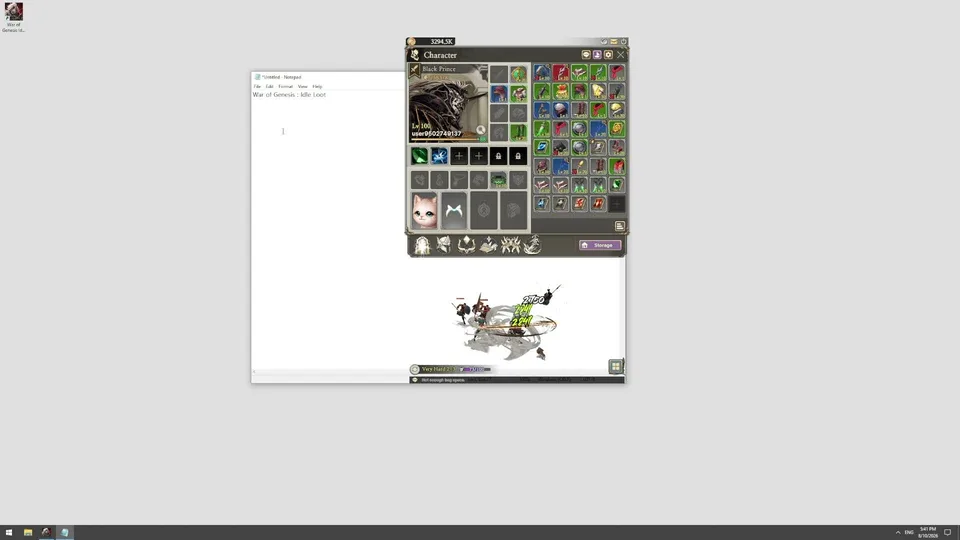
War of Genesis: Idle Loot Marketplace and Currency Guide
Looking for a War of Genesis top-up center? Learn how the in-game economy, Steam market integration, and diamond system actually work in War of Genesis: Idle Loot.
Published: War of Genesis Wiki Editorial Team
Table of Contents
Understanding the Economy in War of Genesis: Idle Loot
Many players searching for a "War of Genesis top-up" center are often looking for a dedicated payment portal or a way to purchase in-game currency directly. It is important to clarify that War of Genesis: Idle Loot is a Steam-based title that operates differently from mobile games with centralized payment hubs. There is no official external "top-up" website for this game.
The game’s economy is built around an integration with the Steam market. Instead of visiting a third-party site to buy currency, the progression and trading systems are handled entirely within the Steam ecosystem. Engaging with these systems correctly is key to managing your resources and upgrading your character effectively.
Tip
Avoid Third-Party "Top-Up" Sites: Be cautious of any website claiming to offer "War of Genesis" top-ups. As a Steam-integrated game, official transactions occur within the Steam client or the game itself. External sites asking for your login credentials are likely phishing attempts.
How the Marketplace Works
The marketplace in War of Genesis: Idle Loot is a unique feature that leverages the Steam market infrastructure. Unlike traditional idle RPGs that might feature an internal shop, this game connects your in-game items to the broader Steam environment.
To participate in the marketplace, you need diamonds. The process is straightforward but requires understanding how the game interacts with your Steam inventory:
Listing Items: You use diamonds to list items on the market.
Steam Integration: After you list an item in-game, you must navigate to your Steam inventory to set the specific price for that item.
Cost: It costs one diamond every time you list an item on the market.
This system creates a player-driven economy where the value of items is determined by the community and the Steam market's supply and demand.
Earning and Using Diamonds
Diamonds are the lifeblood of the War of Genesis: Idle Loot economy. Because they are required for market listings, managing your diamond income is essential for long-term progression.
The primary method for acquiring diamonds is through the Altar. This system is designed to reward consistent play:
Passive Generation: You gain one diamond every 4 hours.
Offline Rewards: This generation continues whether you are actively playing or offline, making it a reliable source of income.
Once you have accumulated diamonds, you have two primary ways to utilize them:
Enhancing the Altar: You can spend diamonds to level up your Altar, which provides additional stats for your character.
Marketplace Usage: As noted, diamonds are required to list items for sale.
Check the Altar Regularly: Ensure you are collecting your diamonds every 4 hours to maximize your potential for market listings and Altar upgrades.
Prioritize Upgrades: Before spending all your diamonds on the market, consider if leveling up your Altar’s stats will provide a better return on investment for your character's power level.
Dismantle Unwanted Gear: Use the blacksmith to dismantle gear you don't need; this provides materials for relics, which are vital for increasing your overall power.
Essential Progression Systems
Beyond the market and diamonds, the game features several progression systems that influence how you play and what items you value. Understanding these helps you decide which items are worth keeping and listing on the market.
Character Builds
You can choose between the Knight (defense/lightning), Ranger (range/poison), and Wizard (attack/fire). Your choice dictates which skills and skins you should prioritize collecting.
Pet and Skin Collection
These are not just cosmetic. Unlocking skins and pets provides passive stat bonuses, even if they aren't currently equipped. Collecting these is a core part of increasing your character's overall strength.
Relics and Runes
Relics require fragments obtained from dismantling items. Runes and wings work similarly to pets, offering stat boosts when equipped or unlocked.
The Role of the Blacksmith
The blacksmith is your primary tool for managing your inventory. You can combine items of the same tier to create higher-tier gear. However, always check the success rate before attempting a combination to avoid wasting valuable materials. If you have excess items, dismantling them is often better than letting them clog your inventory, as the resulting materials are necessary for relic progression.
Battlefield and Growth
To test your character builds, the game offers three main battlefield modes: Raid, World Boss, and Arena. These are automated modes where your character fights enemies or other players.
Participation Rewards: Your rank in these modes directly influences your rewards.
Growth Tab: The growth system is split into the Altar, Training Ground, and Ability Unlock.
Training Ground: Uses tokens from the World Boss to roll for stats. You can lock the stats you want to keep.
Ability Unlock: Similar to a bingo game, you use stones from Raids to match stats horizontally or vertically to unlock new power tiles.
By focusing on these growth systems, you ensure that your character stays competitive, which in turn allows you to farm higher-difficulty maps (Normal, Hard, Very Hard, Nightmare) and obtain better loot for the marketplace.
Frequently Asked Questions
Is there an official top-up center for War of Genesis: Idle Loot?
No. There is no official external top-up center. The game uses the Steam market for trading and in-game currency management.
How do I get more diamonds?
Diamonds are generated via the Altar. You earn one diamond every 4 hours, whether you are online or offline.
Why can't I list items on the market?
Ensure you have enough diamonds to cover the listing fee (1 diamond per item). After listing in-game, you must also set the price via your Steam inventory.
What should I do with unwanted gear?
Use the blacksmith to dismantle unwanted gear, accessories, pets, or runes. This yields materials needed to unlock and upgrade relics, which are essential for increasing your power.