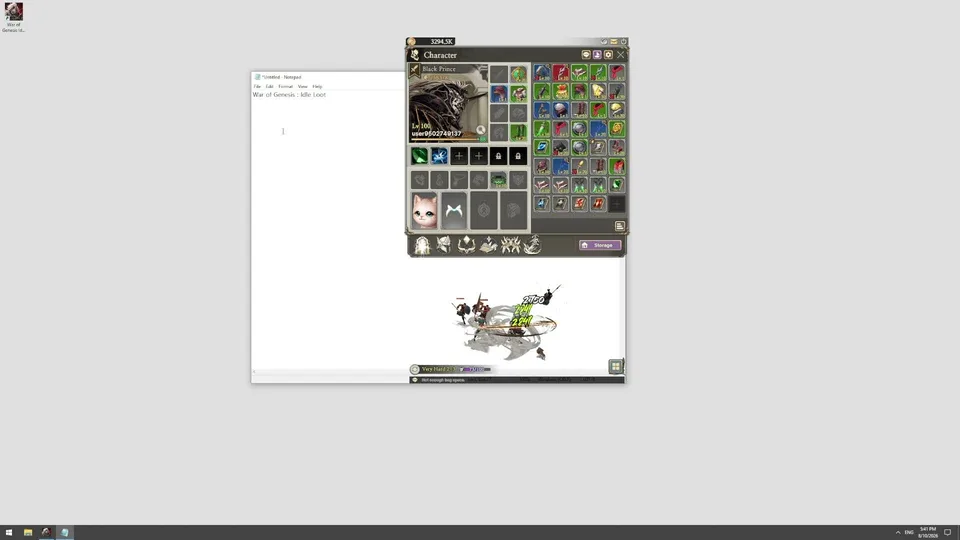
War of Genesis: Idle Loot Guide – Master Your Progression and Steam Market
A comprehensive guide to War of Genesis: Idle Loot. Learn how to optimize your idle RPG progression, character builds, and utilize the unique Steam marketplace integration.
Published: War of Genesis Wiki Editorial Team
Table of Contents
Getting Started with War of Genesis: Idle Loot
War of Genesis: Idle Loot is a streamlined idle RPG experience designed for players who enjoy automated progression systems. Unlike active-heavy RPGs, this title focuses on strategic resource management, character builds, and long-term optimization. Whether you are farming monsters while away from your desk or actively fine-tuning your character’s gear, the game offers a deep layer of customization through its various growth tabs.
The core loop involves selecting one of three specialized characters: the Knight, the Ranger, or the Wizard. Each character type dictates your initial playstyle—defensive, long-range, or fire-based damage. As you progress, your success relies on effectively upgrading skills, equipping pets, and managing your equipment through the blacksmith.
Character Classes and Skill Customization
Choosing your character is the first major decision in the game. According to community insights, your choice significantly impacts how you handle early-game farming:
The Knight
Focuses on defensive capabilities, blocking incoming attacks, and dealing lightning-based damage. Ideal for players who prioritize survivability during long farming sessions.
The Ranger
Specializes in long-range combat, evading incoming attacks, and dealing poison damage. This class is preferred for maintaining distance while clearing mob-heavy maps.
The Wizard
Concentrates on offensive stats like attack power and critical hits while utilizing fire damage. Best for players aiming to maximize damage output and clear stages faster.
Once you reach level 35, you can equip up to six active skills simultaneously. This provides a sandbox environment for creating builds. Always prioritize upgrading the passive skills that align with your character’s specific damage type (Lightning, Poison, or Fire) to ensure your power scales with the difficulty of the maps.
Optimizing Farming and Gear Management
To progress through the game's four difficulty levels—Normal, Hard, Very Hard, and Nightmare—you must efficiently manage your loot. Farming in higher-tier maps like the Ice Castle or Underground Prison is essential for better drops.
Dismantle Unwanted Gear: Use the blacksmith to break down duplicate items or low-tier equipment to gain essential materials.
Combine Strategically: Only combine items of the same tier to increase your chances of a successful upgrade. Always check the success percentage before proceeding.
Invest in Relics: Use fragments obtained from dismantling items to level up relics, which provide permanent stat boosts that persist regardless of your current equipment.
Deep Progression Systems: Altar, Training, and Ability Unlock
Beyond simple gear, the "Growth" tab is where veteran players distinguish themselves. These systems are designed to provide incremental gains that compound over time.
Tip
Don't Forget the Altar: You earn one diamond every four hours, regardless of your online status. Collect these regularly, as they are the primary currency for interacting with the Steam marketplace.
The Training Ground
Spend your training tokens—earned from World Boss encounters—to roll for random stats. You can "lock" specific stats you wish to keep, which allows you to gradually "perfect" your character's stat profile as your training level increases.
Ability Unlock
This system functions similarly to a mini-game. By spending unlock stones from raids, you match stats horizontally or vertically on a grid. This is a strategic way to unlock extra ability tiles and further refine your character’s power.
Utilizing the Steam Marketplace
A unique aspect of this game is its direct integration with the Steam market. Unlike standard in-game shops, this system allows for player-driven economic interaction.
Warning
Listing an item requires one diamond per transaction. Before listing, ensure the item has actual value to other players, as the diamond cost is non-refundable regardless of whether the item sells quickly.
After listing an item via the game's marketplace tab, you must navigate to your Steam inventory to set the final price. This bridge between the idle RPG mechanics and the Steam economy creates a unique incentive to farm rare gear, as high-tier equipment can potentially be traded or sold for value within the Steam ecosystem.
FAQ: Common Player Queries
Does the game continue to progress while I am offline?
Yes, the game is designed as an idle RPG. Your character will continue to fight, farm, and collect loot even when the game is closed.
What is the most important currency for the marketplace?
Diamonds are the core currency for the marketplace. You can obtain them passively from the Altar, so ensuring you check in every few hours is vital for your economic progression.
Should I focus on pets or Machina first?
Pets provide constant passive stat bonuses, while Machina offers active utility and extra damage. It is recommended to balance both, as Machina will significantly speed up your farming efficiency in higher difficulty maps.